Blog Details
- Home
- Blog Details



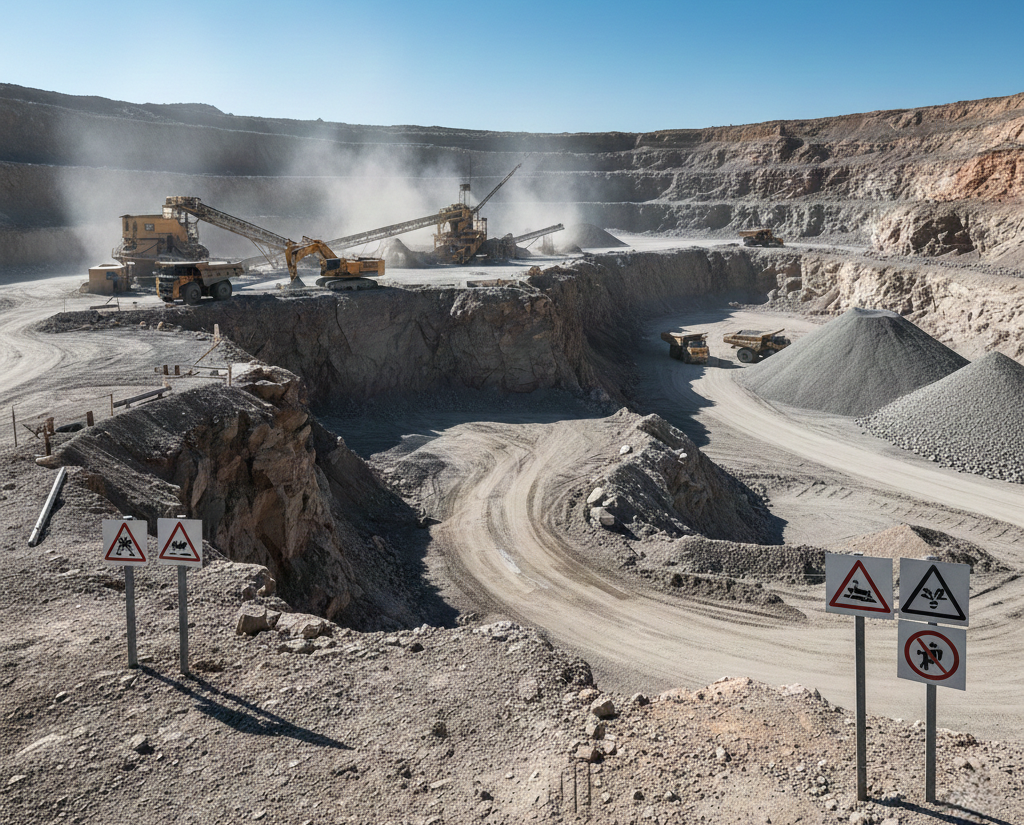
Mining operations — especially quarrying, blasting, excavation, and bulk crushing — function in environments where safety cannot be optional. Regulatory compliance is the backbone of responsible mining, ensuring that every worker, machine, and blasting zone operates under mandatory safety frameworks. However, the complexity of safety regulations and the scattered nature of mining sites make compliance one of the toughest operational challenges for quarry operators.
The first challenge is documentation and permit adherence — blasting approvals, licensing, environmental clearances, consent-to-operate, and land-use permissions require constant renewal and reporting. Any delay or oversight can shut down operations overnight, halting supply to infrastructure contractors and resulting in financial loss. Alongside permits comes workforce training — ensuring excavator operators, drill technicians, and ground staff follow correct PPE standards, signaling protocols, and equipment runtime checks.
Mining sites are not unsafe by default — they become unsafe when processes, training, and vigilance are ignored.
Safety Compliance Expert
Regular field monitoring is another hurdle. Supervisors are expected to validate blast-zone boundaries, ensure safe drilling depth, maintain machinery inspection logs, and coordinate material dispatch — often across large geographical spreads. When manual records are used, compliance failures go unnoticed until an incident occurs. Companies adopting digital logs, IoT-enabled equipment monitoring, and remote audits are seeing a major reduction in violations and downtime.
Another layer of complexity is environmental impact regulation. Quarry dust, noise, vibration, and groundwater disruption are now subject to strict monitoring, leading mining firms to adopt misting systems, vibration-controlled drilling, and standardized blasting schedules. The industry is moving from informal execution to process-driven safety administration — and companies that embrace compliance culture early will sustain long-term operations, stable licensing, and government trust.